
Last updated November 23, 2026
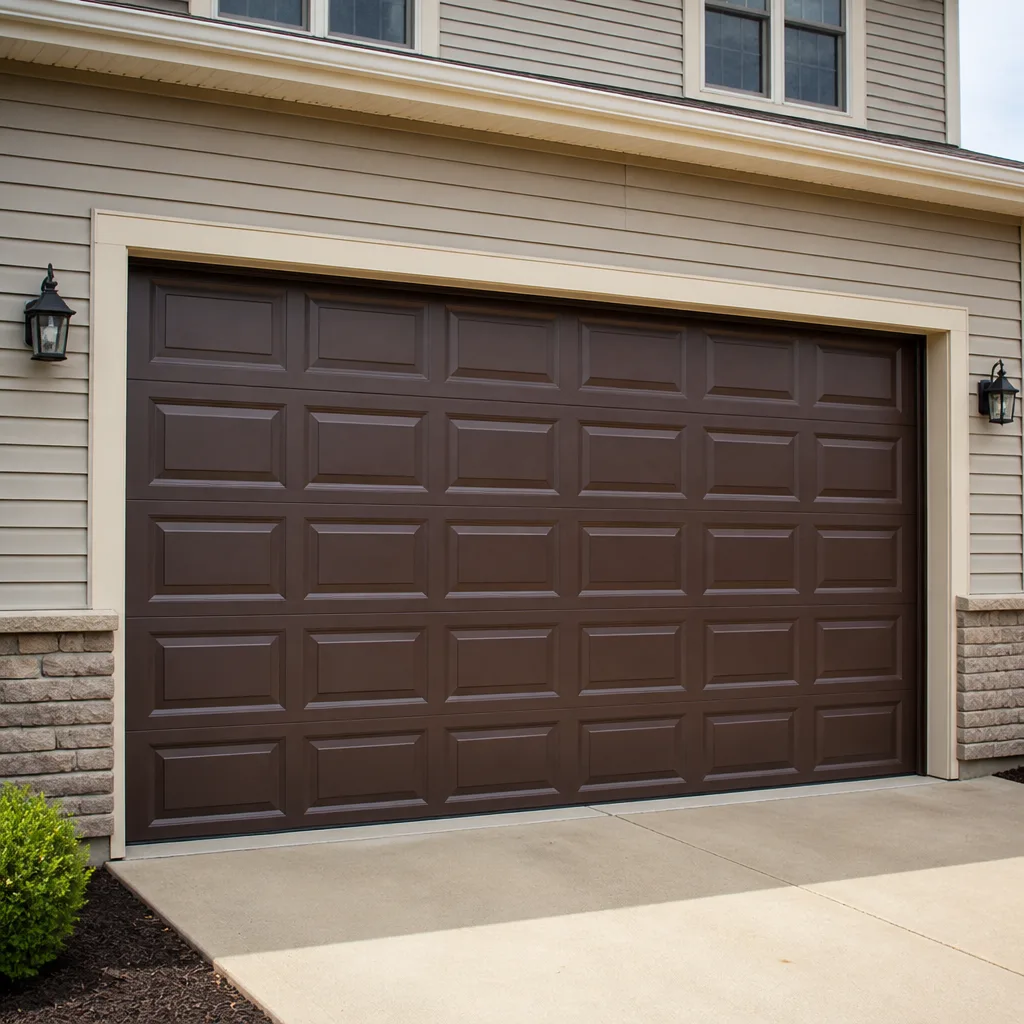 Raised-panel steel
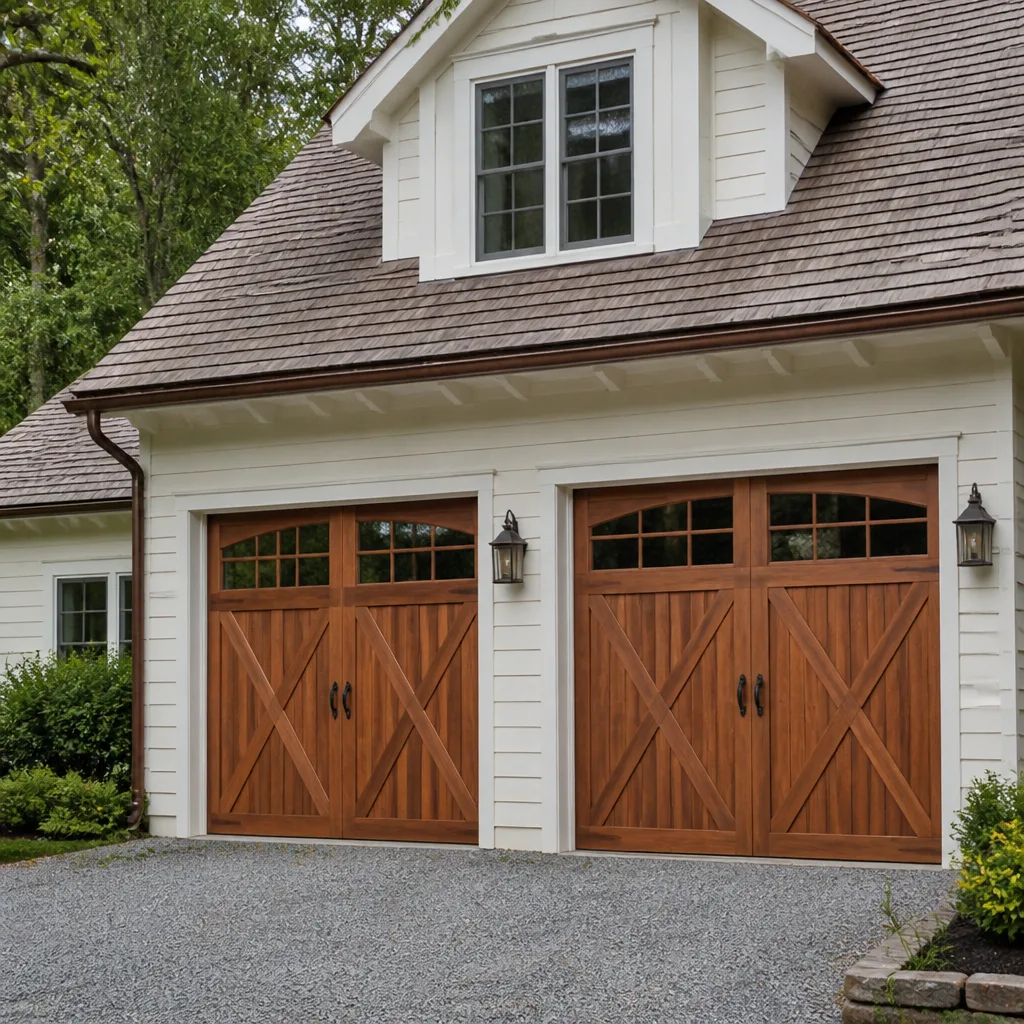 Carriage house
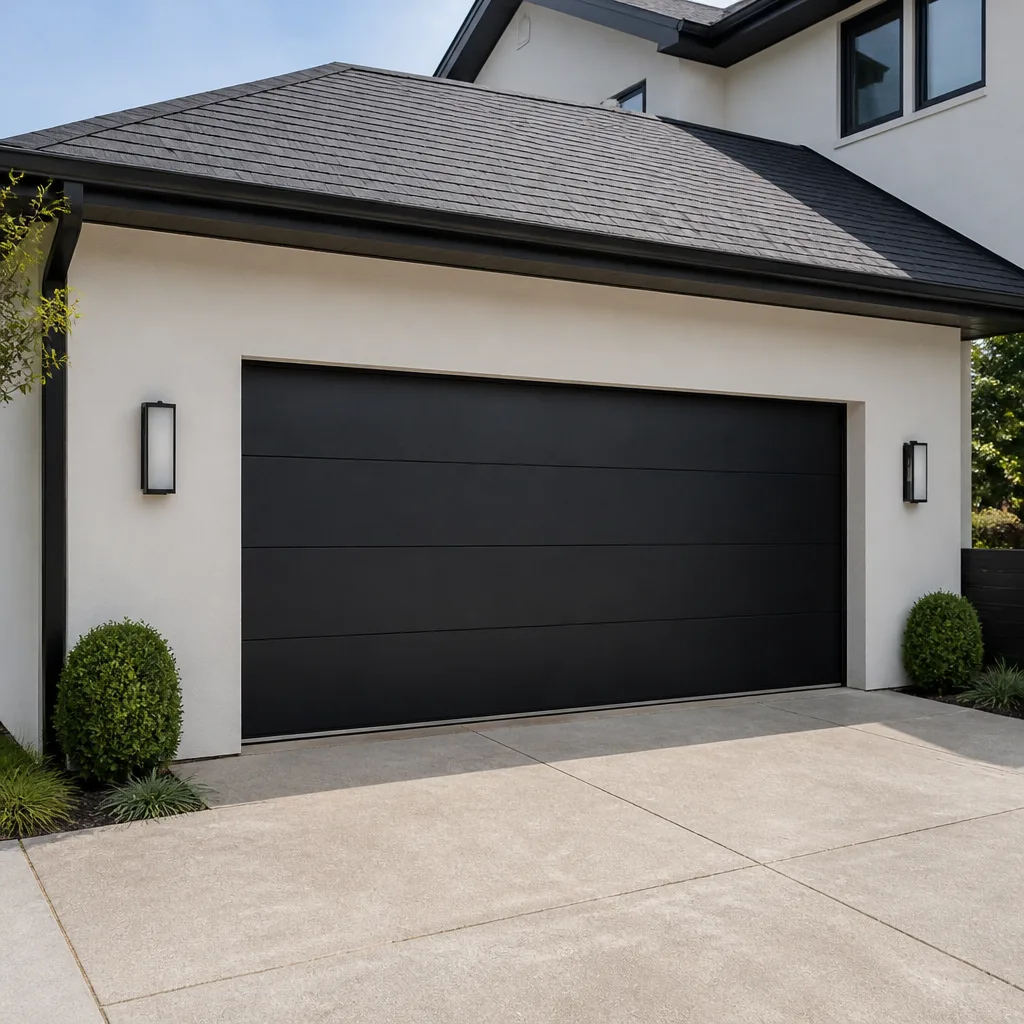 Modern flush
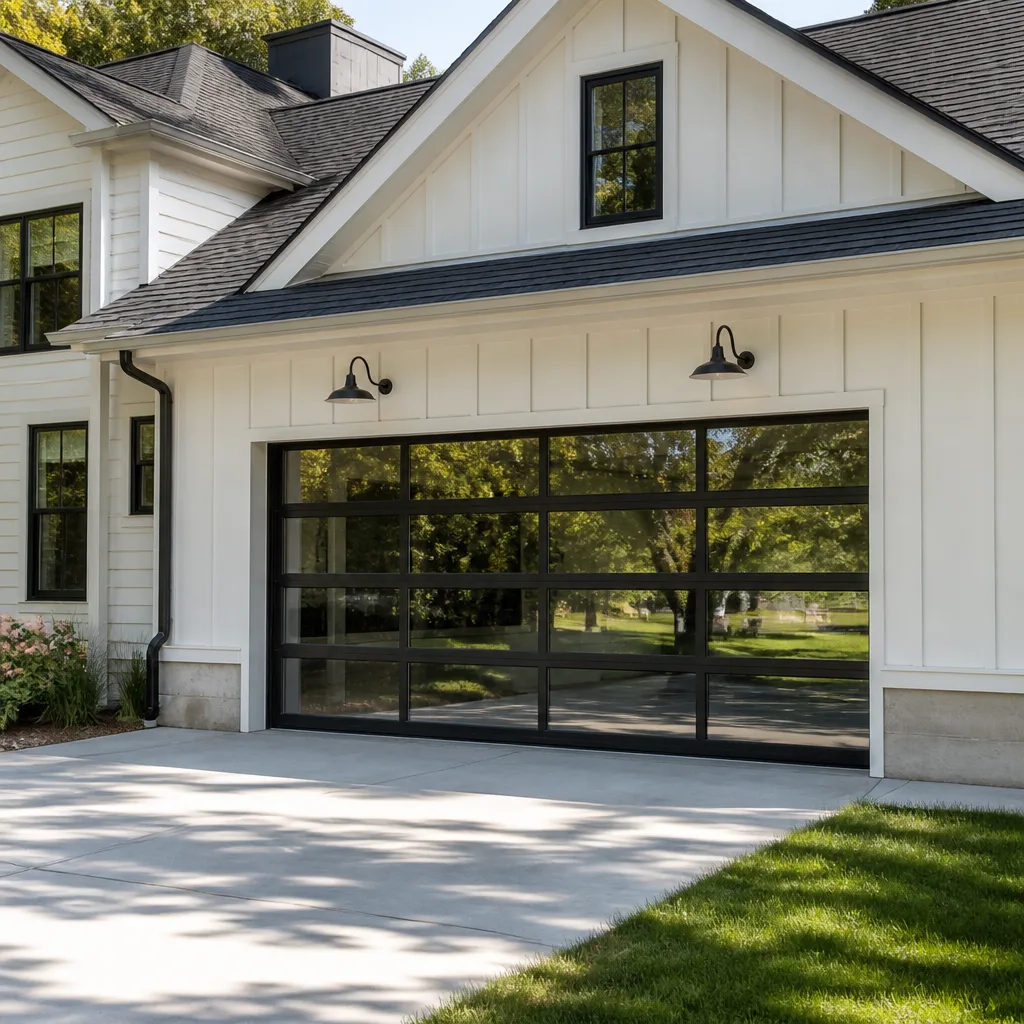 Full-view glass
 LiftMaster openers
 Chamberlain openers
Full 25-point door and opener safety check with every visit - springs, cables, rollers, tracks, and your LiftMaster or Chamberlain opener included
You get a price before we start. It does not change when the pro arrives.
Get your free estimateGarage Door Repair Troubleshooting in Town ‘n’ Country: Common Problems and How to Fix Them
A door that moves but grinds is a completely different repair than a door that won’t move at all. Yet most troubleshooting guides treat both the same, sending homeowners down the wrong diagnostic path, spending money on the wrong part, or forcing a door that should stay shut. The truth is that almost every garage door failure in Town ‘n’ Country falls into one of five categories, and knowing which category you’re in tells you whether to grab a screwdriver or call a technician. This guide maps every symptom to that decision. You’ll learn to read the sounds, movement, and visual cues your door gives you, run a 60-second test that separates opener failure from spring failure from track failure, and understand which repairs are genuinely safe to handle yourself versus which ones carry real injury risk. Town ‘n’ Country’s heat and humidity add their own twists, and we’ll cover those too.
Quick Answer
If your garage door won’t open or close, the first step is a 60-second manual test: pull the red release cord to disconnect the opener and lift the door by hand. If it lifts easily and stays up, the problem is the opener. If it’s heavy or won’t budge, the problem is the door itself, usually a spring, cable, or track. Grinding, squealing, or scraping sounds point to rollers, hinges, or track alignment, while a door that moves unevenly or hangs crooked usually has a cable or spring problem. Springs and cables are the dangerous parts and should always go to a trained technician.
Styles & brands we work with
- Raised-panel steel
- Carriage house
- Modern flush
- Full-view glass
- LiftMaster openers
- Chamberlain openers
Table of Contents
- The Five Failure Categories That Cover Almost Every Problem
- The 60-Second Manual Test: Opener, Spring, or Track?
- Reading the Sound: What Grinding, Squealing, and Banging Tell You
- How Town ‘n’ Country Heat and Humidity Attack Your Door
- DIY-Safe Repairs vs. the Ones That Can Hurt You
- How to Operate Your Door Manually While You Wait
- Opener Problems: When the Motor Is the Culprit
- Keeping Your Door Out of the Repair Column
The Five Failure Categories That Cover Almost Every Problem
Every garage door system, no matter the brand, comes down to five subsystems. When something goes wrong, it’s almost always one of them. Sorting your symptom into the right category is the whole game.
- Springs and cables. The counterbalance system. These lift the door’s weight so a small opener motor can move it. When they fail, the door becomes dangerously heavy.
- Tracks and rollers. The guide system. Rollers ride inside the tracks and keep the door traveling in a straight line. Bent tracks or worn rollers cause grinding and binding.
- The opener and its controls. The motor, logic board, safety sensors, wall button, and remote. These move the door but don’t carry its weight.
- The door itself. Panels, hinges, and the bottom seal. Heat, humidity, and impact damage show up here first.
- The weather seal and framing. The bottom rubber, side jambs, and top seal that keep out water, wind, and pests. This is the most neglected category and the one that quietly causes the others.
In our experience across Town ‘n’ Country, spring and cable failures and opener failures account for the large majority of calls. Track and roller problems come next, and door and seal issues tend to build slowly until a homeowner notices water inside or a draft that wasn’t there before. Categorize first, then act.
The 60-Second Manual Test: Opener, Spring, or Track?
This is the single most useful thing you can do before you call anyone. It takes under a minute and tells you which of three systems is failing. Here’s how it works:
- Close the door and make sure no one is standing under it.
- Pull the red emergency release cord hanging from the opener rail. This disconnects the door from the motor.
- Lift the door by hand, using the handle or a panel edge. Lift slowly.
- Release it about halfway up.
If the door lifts with light effort and stays put when you let go, your springs are doing their job and the door is balanced. Your problem is almost certainly in the opener: the motor, the sensors, the wall button, or the remote.
If the door is very heavy or won’t lift at all, the springs have failed or a cable has snapped. This is a stop-here moment. Don’t force it. A door with a broken spring can come down hard and is one of the leading causes of garage door injuries.
If the door lifts but binds, scrapes, or hangs crooked, you likely have a track alignment or roller problem, or a cable that’s come off its drum. Crooked movement points toward cable issues, which are also a professional repair.
Reconnect the door to the opener afterward by lifting it to the fully open position and pulling the release cord back until it clicks into the trolley. If the door won’t reconnect smoothly, note that too. It’s another clue for the technician.
Reading the Sound: What Grinding, Squealing, and Banging Tell You
Your door talks. The trick is knowing what it’s saying. Sound is often the first symptom, arriving weeks before a door actually fails to open.
- Grinding or scraping. Usually rollers dragging in tracks, a bent track section, or debris in the track. Check for visible dents and clear any loose grit. If the track is noticeably bent, it needs straightening or replacement by a technician.
- Squealing or shrieking. Dry or worn rollers and hinges, or a failing opener gear. Lubricating rollers and hinges with a garage-door-rated lubricant often quiets squealing. If it continues, the opener gear is suspect.
- A loud bang from above the door. This is almost always a torsion spring breaking. It sounds like a firecracker and the door will suddenly feel very heavy. Stop using the opener immediately.
- Rattling over every panel. Loose hinge bolts, worn rollers, or a loose opener rail. Usually a low-risk tightening job, but check that nothing is actually coming apart.
- Clicking without movement. The opener is receiving the signal but not engaging. Could be the motor, capacitor, or logic board. That’s an opener repair, not a door repair.
One caution on that loud bang: if you have extension springs rather than torsion springs, a broken spring is also a safety concern because extension springs should have safety cables running through them. If you don’t see cables through your extension springs, have a technician check that setup. It’s a straightforward fix that prevents a serious hazard.
How Town ‘n’ Country Heat and Humidity Attack Your Door
Garage doors in the Tampa Bay area live a harder life than doors in cooler climates. The combination of intense sun, high humidity, and warm, moist air drives several failure patterns we see regularly around Town ‘n’ Country.
Humidity and metal hardware. Sustained humidity accelerates rust on hinges, rollers, springs, and track bolts. Rusted rollers stop rolling and start dragging. Rusted hinges seize. A light application of garage-door lubricant a couple of times a year makes a real difference on Town ‘n’ Country doors that face the afternoon sun.
Sun and heat on door sections. Steel and vinyl door panels expand and contract with daily heat cycles. Over time, sections can warp or bow, especially on west- and south-facing garages. A warped section binds in the track and stresses the opener. Wood doors are more vulnerable to moisture swelling at the bottom where humidity is highest.
Weatherstripping degradation. The bottom seal and side jambs take the worst of it. Heat hardens the rubber, humidity softens the adhesive, and the seal eventually pulls away. Once it does, water, insects, and small pests find their way in. In Town ‘n’ Country, garage doors that back up to green space or retention areas are especially prone to pest damage around a failing seal.
Expanding soil and framing. Heavy summer rains can shift soil around a garage slab and slightly move the framing. That’s often what pushes a track out of alignment in the first place, even when nothing hit the door.
None of these conditions is unusual. They’re the normal wear pattern for this part of Florida, and they’re all manageable with attention. The homeowners who avoid big repairs are the ones who catch these small changes early.
DIY-Safe Repairs vs. the Ones That Can Hurt You
We’d rather you handle the simple stuff yourself and call us for the rest. Here’s an honest split.
Genuinely DIY-safe:
- Lubricating rollers, hinges, and the opener rail with a garage-door-rated lubricant
- Tightening loose hinge and bracket bolts with a socket wrench
- Replacing the bottom weather seal or side jamb seal
- Cleaning the photo-eye safety sensors and realigning them
- Cleaning debris out of the tracks
- Replacing remote batteries and re-pairing remotes or keypads
Call a professional:
- Torsion spring replacement. These springs are under extreme tension. Adjusting or replacing them without the right winding bars and knowledge can cause severe injury.
- Extension spring replacement. Still under tension and still dangerous, especially without safety cables.
- Cable and drum work. Cables snap back with tremendous force.
- Track straightening or replacement. A door that comes off track can fall.
- Panel replacement and hinge replacement. These affect the door’s structural integrity.
- Opener motor or circuit board replacement. Electrical work and opener calibration that’s best left to someone with the right tools.
Springs are the most dangerous part of your garage door system, and it’s not close. If your test points to springs or cables, stop and call. The rest you can often handle safely. For anything beyond that line, our garage door repair service covers the full range, from a single broken hinge to a full track rebuild.
How to Operate Your Door Manually While You Wait
If your door is stuck and you need to get a car in or out before we can arrive, there’s a safe way to do it. This matters because a door forced the wrong way can damage panels, cables, or the opener, and could put you in danger.
- Confirm the door is fully closed and nothing is underneath. Never work under a door that’s being held open.
- Pull the red release cord. This disconnects the opener’s trolley from the door arm.
- Lift the door slowly by hand. If it’s too heavy, stop. A door with a broken spring should not be lifted by hand.
- Never leave the door open while you’re away or overnight. A door without spring support can drop.
- If the door is your only exit and it won’t lift manually, call us right away. We treat doors stuck open to the street and doors blocking a vehicle as urgent calls.
On warranty: pulling the manual release is normal operation and doesn’t void warranties. What does void them is forcing the door, hitting it, or disassembling spring or cable hardware. If you’re unsure whether what you’re doing is safe, call first. We’ll walk you through the release process and book you in.
For doors that can’t wait, like a broken spring blocking the car or a door stuck open to the street, we run emergency garage door service: fast dispatch from 7am to 7pm, Sunday through Friday. We answer 24/7 and book anything outside dispatch hours into the next opening.
Opener Problems: When the Motor Is the Culprit
If your 60-second test showed the door lifts easily by hand, the game shifts to the opener. Here’s how the common failures break down, including the brands we see most often in Town ‘n’ Country: LiftMaster, Chamberlain, and Genie units dominate the driveways around here, and we also work with Raynor systems and other major brands.
- Remote won’t work but wall button does. Battery, re-pairing, or a logic board issue. Try a fresh battery first.
- Neither remote nor wall button works. Could be a tripped breaker, a dead outlet, or a logic board failure. Check the outlet with a lamp.
- Door opens but won’t close (or reverses immediately). Most often the safety sensors. The photo eyes should be aligned and clean, with a steady indicator light on each one.
- Door reverses partway up. Usually the travel limits or the force settings need recalibration, or there’s debris or a bind in the track.
- Clicking but no movement. Failing capacitor, stripped opener gear, or a dead logic board. This is an opener repair, not something to diagnose yourself with a screwdriver.
- Smart features stopped working. If you use a myQ-enabled LiftMaster or Chamberlain unit and the phone app stops connecting, it’s usually a Wi-Fi pairing or hub issue, not the motor. Our garage door opener repair service covers smart and traditional openers alike.
One note on openers: they should never be asked to do the springs’ work. If your door is heavy by hand, the opener isn’t the problem. Replace the opener on a door with failed springs and you’ll just burn out the new motor.
Keeping Your Door Out of the Repair Column
The best troubleshooting is the troubleshooting you don’t have to do. Ten minutes twice a year catches most problems before they cost you.
- Run the 60-second manual test. Once in spring and once in fall, disconnect the opener and lift the door by hand. You’ll feel a weakening spring before it breaks.
- Lubricate rollers and hinges. A garage-door-rated lubricant, not WD-40. Humidity around Town ‘n’ Country makes this a twice-a-year job.
- Look at your seals. Bottom and side seals should sit flush. Replace them at the first sign of cracking or pull-away.
- Watch for rust. Spot rust on hinges and track bolts is a signal, not cosmetic. Treat it and lubricate.
- Listen for changes. A door that’s getting louder is telling you something’s wearing.
- Test the safety sensors monthly. With the door open, wave an object in front of the photo eyes and confirm the door reverses. It’s a two-minute check.
- Keep the tracks clean. Sweep out grit and leaves. Never use grease in the tracks, just a damp cloth and a light lubricant on the rollers.
If you’ve owned your door a long time and it’s been through a decade of Florida summers, a tune-up is worth it. If the door itself is on its last legs, that’s the point where a new door makes more sense than repeated repairs. Our garage door installation service starts with a free measure and a written quote, so you can compare repair versus replacement with real numbers.
Common Mistakes to Avoid
- Forcing a door with a broken spring. Running the opener on a door with a snapped spring stresses the motor, bends the door, and risks the door crashing down. Stop and call.
- Treating every problem as an opener problem. If the door is heavy by hand, no opener on the market will fix it. Diagnose the door first.
- Using grease in the tracks. Grease attracts grit and makes the problem worse, especially in the sandy, humid conditions around Town ‘n’ Country. Use a light lubricant on rollers, not grease in the tracks.
- Painting over rusted hinges and calling it done. Rust on hinges and track bolts is a wear signal, not a cosmetic issue. Address it or it will spread.
- Ignoring a failing bottom seal. That hardened strip of rubber lets in water, insects, and small pests, and in Town ‘n’ Country it can let in snakes and lizards chasing shelter.
- Adjusting spring tension without the right tools. This is the injury risk in the garage door trade. Springs are under extreme tension and need a trained hand.
- Topping up a worn-out opener with a bigger motor. A bigger motor on a heavy, unbalanced door just fails faster. Fix the balance first.
See the difference
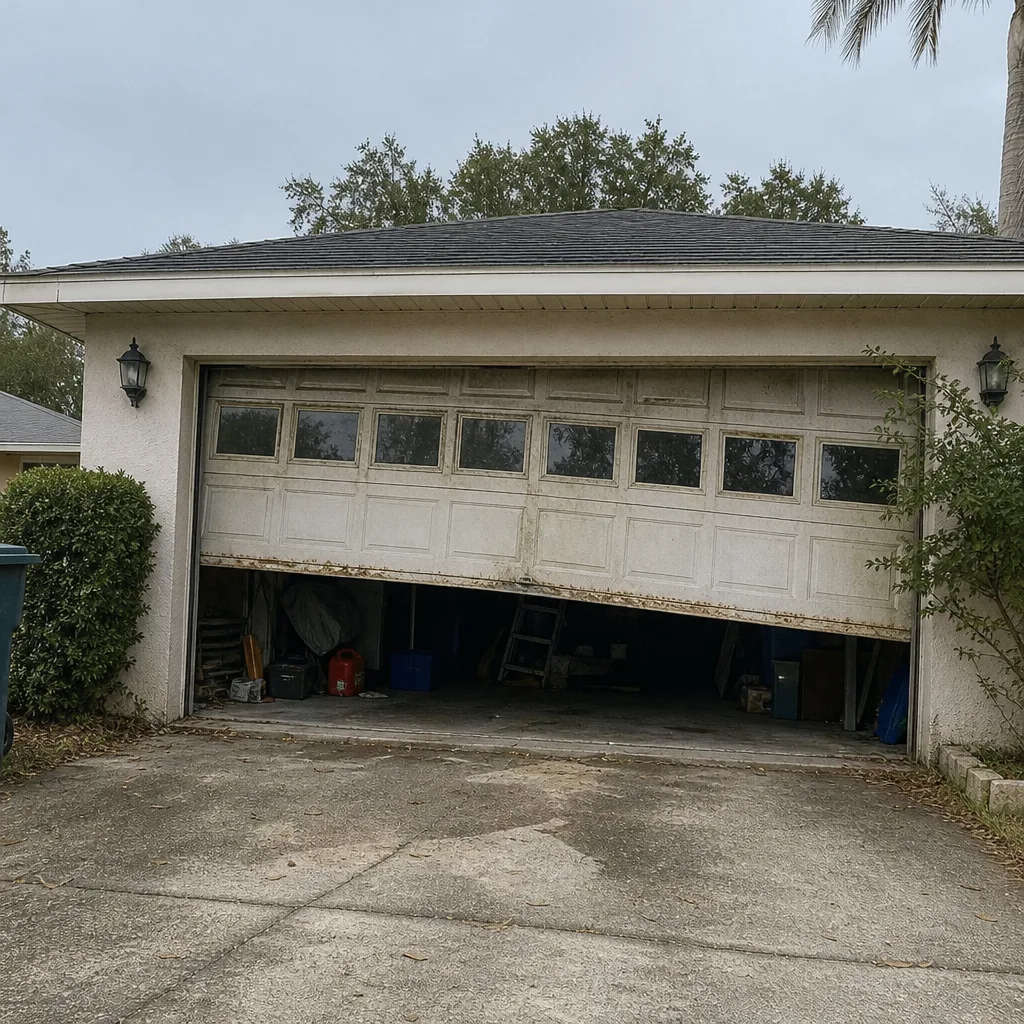 Before
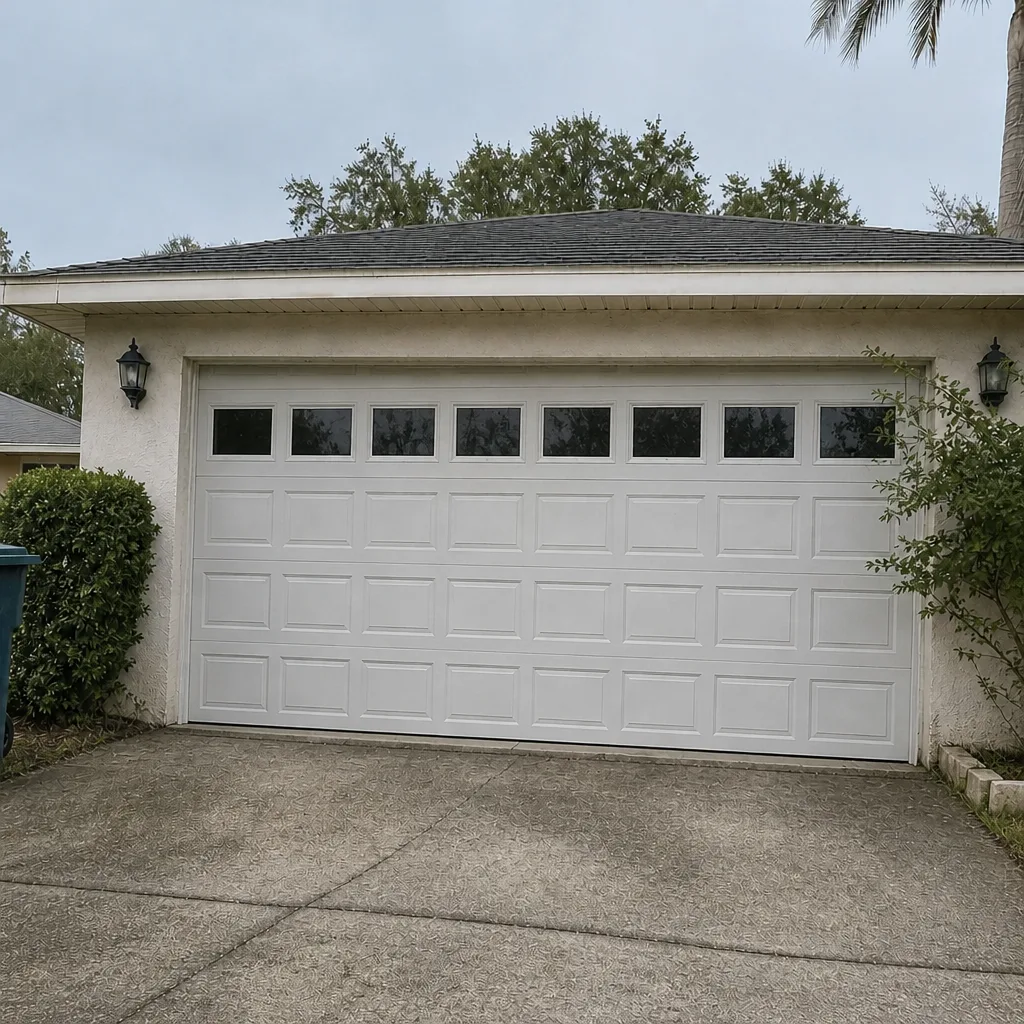 After
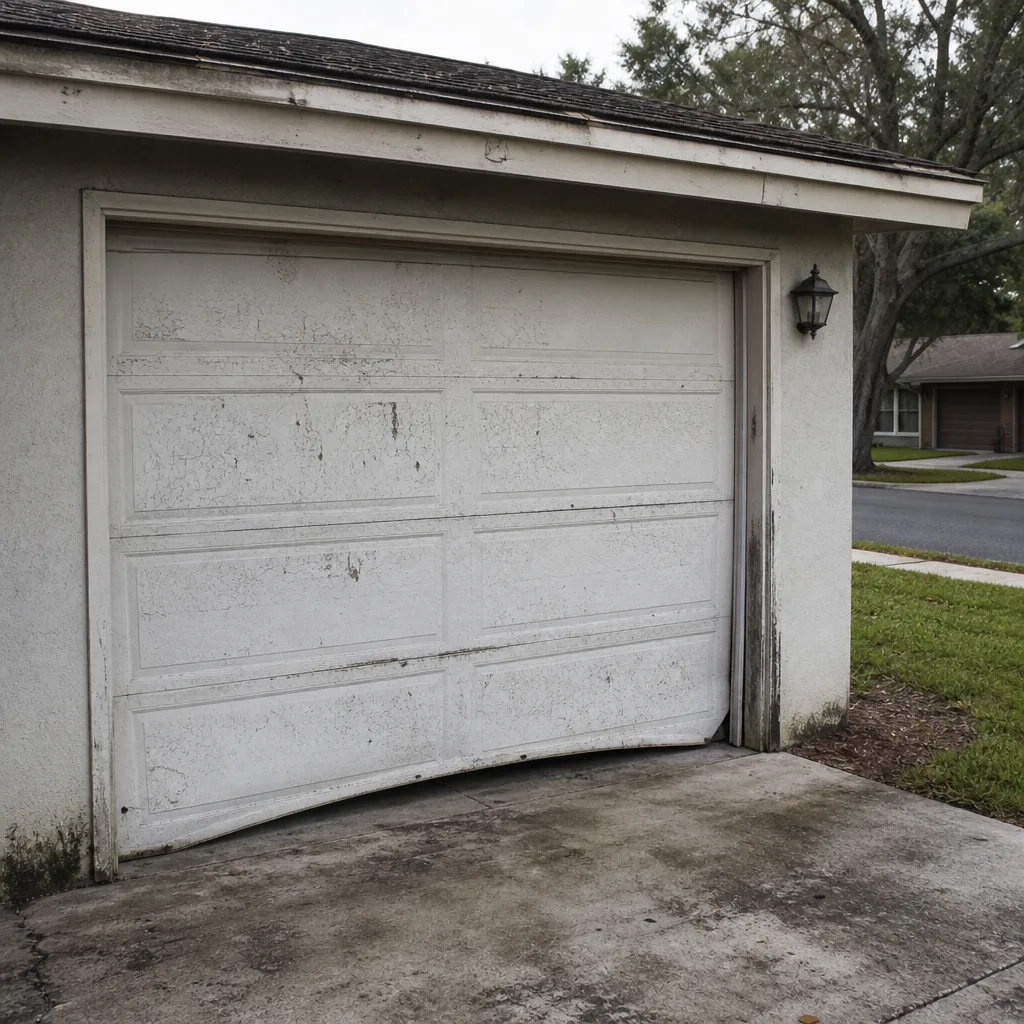 Before
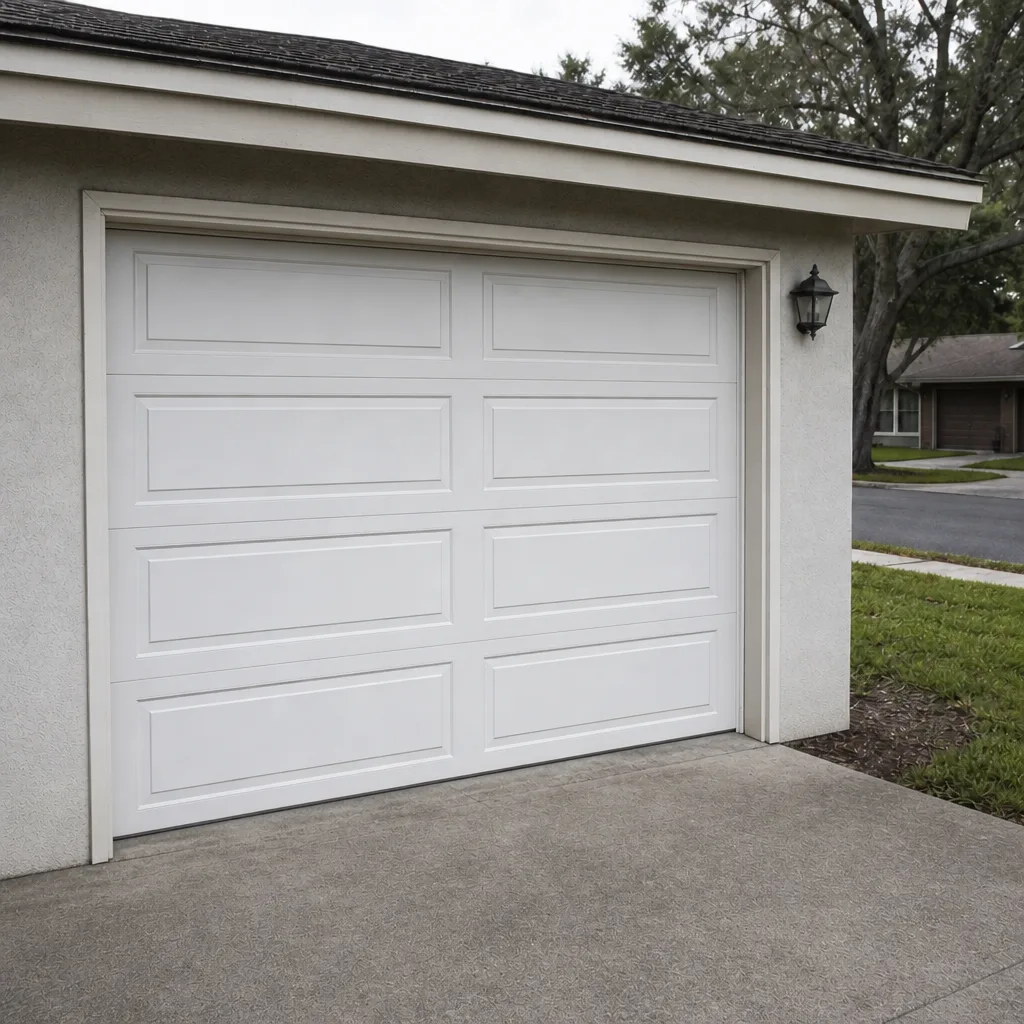 After
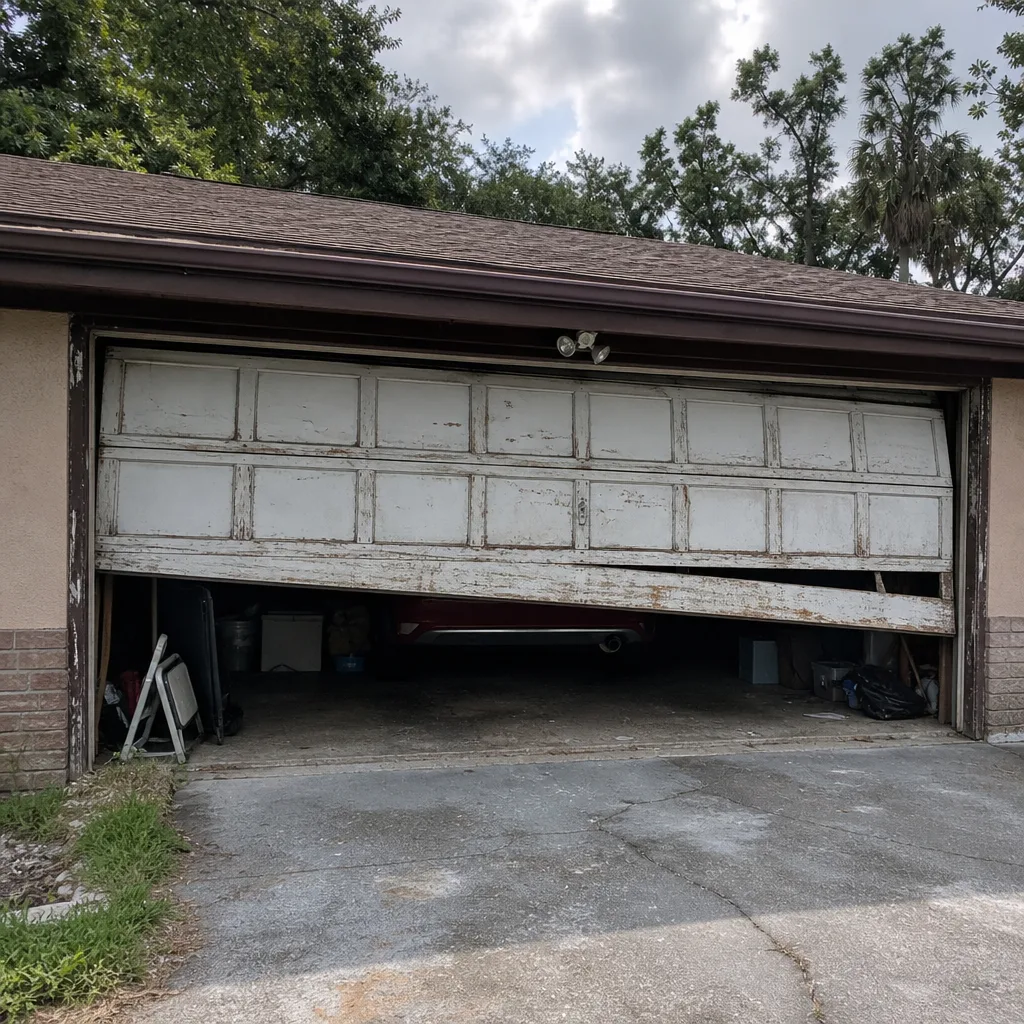 Before
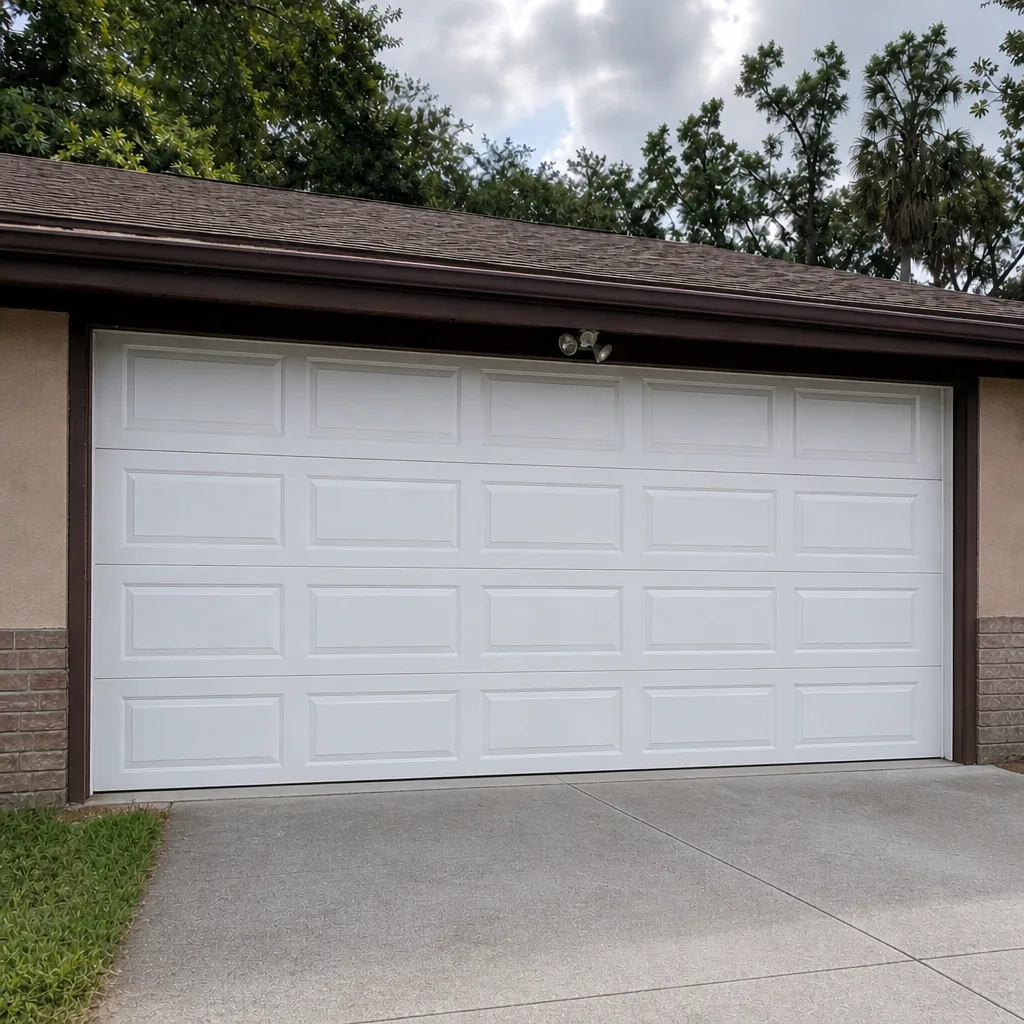 After
When to Call a Professional
Some diagnoses end in a phone call. If your door is heavy to lift by hand, if you’ve heard a loud bang and the door won’t move, if a cable looks slack or has come off its drum, or if the door is hanging crooked or off track, stop and call. Those are springs and cables, and they carry real injury risk. If the door moves fine but the opener clicks, hums, or reverses for no reason, that’s an opener repair. It’s worth a call too. And if the door is so old or damaged that repeated repairs are adding up, ask about a full replacement.
Town ‘n’ Country Garage Door Repair offers free estimates in Town ‘n’ Country. We work on the brand you already own, across eight major brands including LiftMaster, Chamberlain, Genie, Clopay, Amarr, Wayne Dalton, Craftsman, and Raynor. Our technicians have up to 12 years of experience, and springs are handled in-house. Call (855) 419-7945. We answer 24/7. Fast dispatch from 7am to 7pm, Sunday through Friday, and closed Saturday.
Frequently Asked Questions
Spring replacement is typically estimated per spring, and a matched pair is usually replaced together, so a pair costs about twice a single spring. The written estimate sets the final price, and it’s agreed before any work starts. Call (855) 419-7945 for an exact quote. Estimates are free.
For doors that can’t wait, like a broken spring blocking a vehicle or a door stuck open to the street, we treat it as an urgent call, not a next-week appointment. We answer 24/7 and dispatch from 7am to 7pm, Sunday through Friday, and we’re closed Saturday. Call (855) 419-7945 and we’ll get you booked into the next available slot.
No. We give you a written estimate after we diagnose the issue, you approve it, and that’s the price for the job. If we find something extra that needs attention, we’ll explain it and get your approval before doing the work. You won’t get an invoice bigger than the agreed quote. Call (855) 419-7945 for a free estimate.
The local professionals we connect you with are licensed and insured as their state requires. Our technicians have up to 12 years of experience, and spring work is handled in-house rather than subcontracted. Call (855) 419-7945 to talk through your door.
Often yes. Grinding is usually a roller, hinge, or track issue. Clean the tracks, lubricate the rollers and hinges with a garage-door-rated lubricant, and check for visibly bent track sections. If grinding continues or the door binds, that’s the point to call. Call (855) 419-7945 for a free estimate if you’re not sure.
Most likely the emergency release was pulled, disconnecting the door from the trolley. Reconnect it by lifting the door fully open and pulling the release cord back until it clicks. If that’s not it, the opener gear or trolley may have failed, which is a repair job. Call (855) 419-7945 and we’ll diagnose it.
The Bottom Line
Your garage door problem sits in one of five categories: springs and cables, tracks and rollers, the opener, the door itself, or the weather seals. Run the 60-second manual test and you’ll know which one. If the door lifts easily by hand, look at the opener. If it’s heavy or crooked, stop and call. Springs, cables, and drums are the parts that hurt people, and they deserve a technician. Everything else, from lubrication to seal replacement, is within reach for most homeowners. Keep an eye on rust and heat damage in Town ‘n’ Country’s climate, run the manual test twice a year, and catch wear while it’s still small.
Contact
Stuck on a diagnosis, or looking at a door that won’t budge? Our team handles Town ‘n’ Country Garage Door Repair from a broken spring to a full new door, across eight of the major brands homeowners actually own. Call (855) 419-7945 for a free estimate. We answer 24/7. Fast dispatch from 7am to 7pm, Sunday through Friday, closed Saturday.
Written by the team at Town ‘n’ Country Garage Door Repair.