
Last updated November 23, 2026
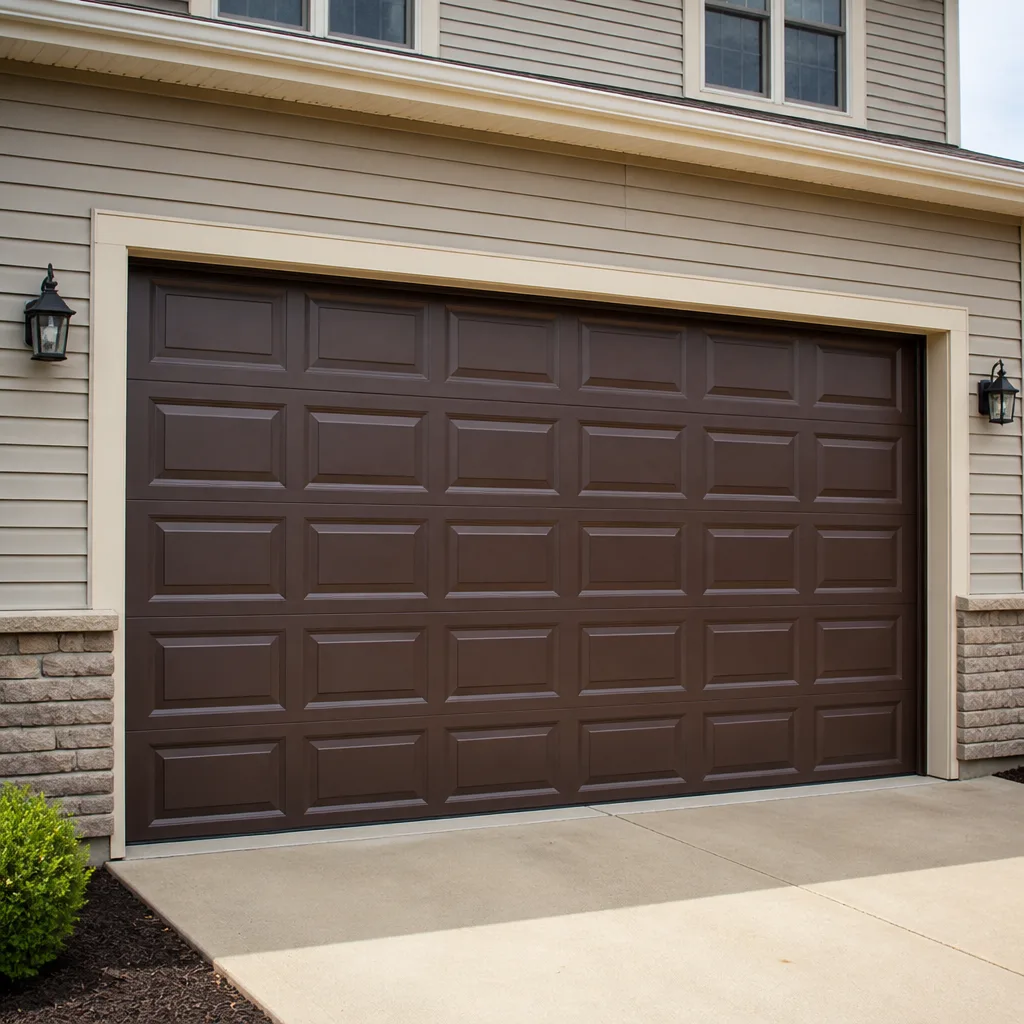 Raised-panel steel
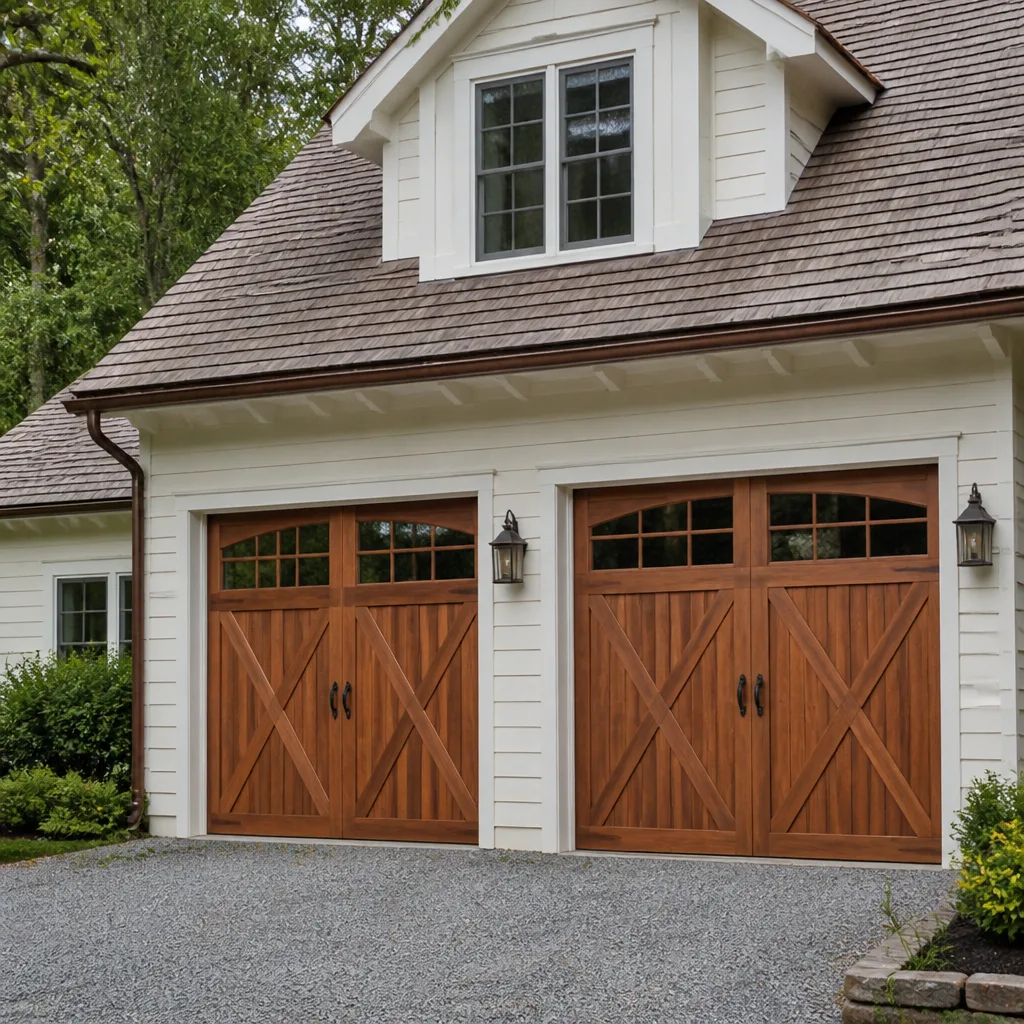 Carriage house
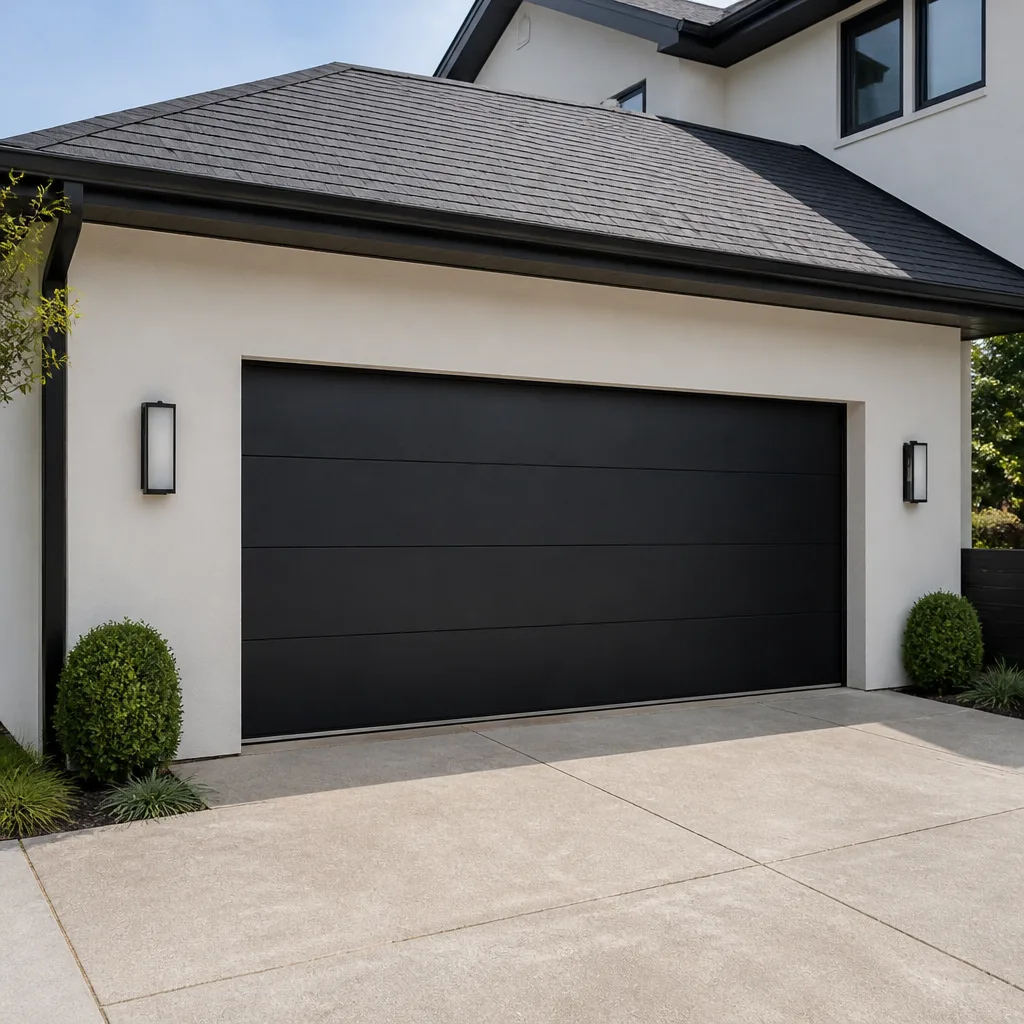 Modern flush
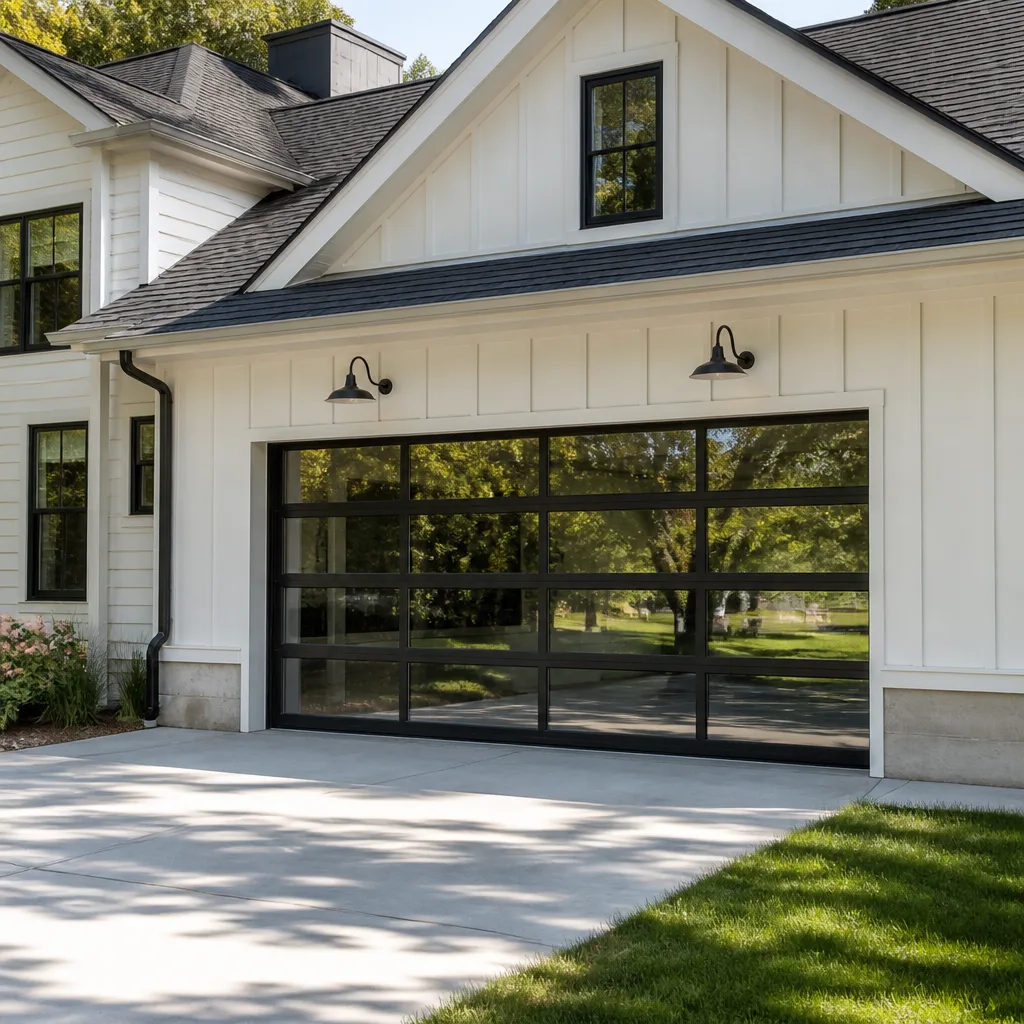 Full-view glass
 LiftMaster openers
 Chamberlain openers
Full 25-point door and opener safety check with every visit - springs, cables, rollers, tracks, and your LiftMaster or Chamberlain opener included
You get a price before we start. It does not change when the pro arrives.
Get your free estimateGarage Door Repair Maintenance Checklist for Town ‘n’ Country Homeowners
The most expensive garage door mistake we see in Town ‘n’ Country isn’t a skipped inspection. It’s a can of the wrong spray. Homeowners reach for WD-40 because it’s in the garage already, hit the rollers and hinges, and unknowingly strip the nylon coating off plastic rollers. A part that costs a few dollars to swap becomes a full service call, and the door runs rougher afterwards than it did before. The checklist below is built around what actually fails in Town ‘n’ Country homes, not a generic list copied from a northern climate. Town ‘n’ Country summers are long, humid and hot, and your door, springs, seals and opener feel every bit of it. Read on for what to check monthly, quarterly and yearly, which lubricants belong on which component, how to run a balance test correctly, and the red-line items that mean stop and call a technician, no exceptions.
Quick Answer
A practical garage door maintenance checklist for Town ‘n’ Country homeowners covers three frequencies: monthly (visual inspection, balance test, auto-reverse test), quarterly (lubrication with the correct product, weatherstripping check, seal inspection after heavy rain), and annually (full hardware tightening, roller and cable review, opener force and travel reset). In Town ‘n’ Country’s heat, avoid WD-40 on rollers and hinges, inspect bottom seals after summer downpours, and recheck auto-reverse once temperatures climb.
Styles & brands we work with
- Raised-panel steel
- Carriage house
- Modern flush
- Full-view glass
- LiftMaster openers
- Chamberlain openers
Table of Contents
- Why Town ‘n’ Country Heat Changes Your Maintenance Schedule
- Your Monthly Checklist
- Your Quarterly Checklist
- Your Annual Checklist
- Which Lubricant Goes Where (And Where Nothing Goes)
- How to Run a Balance Test and Read the Results
- Florida-Specific Checks Competitors Skip
- Red-Line Items That Stop the Checklist
Why Town ‘n’ Country Heat Changes Your Maintenance Schedule
Heat is the single biggest stressor on a garage door system in Town ‘n’ Country. Metal expands and contracts with temperature swings, and while the range here is narrower than in colder states, the sustained summer heat keeps every metal component working at the top of its tolerance. Torsion springs, the coiled steel that lifts the door’s weight, lose tension faster when they run hot. Rollers deform slightly. Weatherstripping softens and, in the humidity, becomes a surface where mold can settle.
That’s why the standard advice to check your door once or twice a year undersells the job in Town ‘n’ Country. A door in a hot, humid garage needs attention more often than in a mild climate, and the priority order is different. Lubricant choice matters more. Seal condition matters more. Auto-reverse testing after a heat wave matters more, because the door’s balance can shift as metal expands.
We’ve worked on doors in Town ‘n’ Country long enough to know which failures are seasonal and which are year-round. Summer brings seal and weatherstripping issues plus balance drift. The wetter months bring moisture against the bottom seal. The heat never fully leaves, so torsion springs stay under load all year. None of that is meant to alarm you. It’s meant to explain why this checklist is organized the way it is. It’s calibrated to the actual failure pattern here, not a template.
One more local factor: Town ‘n’ Country has a mix of older residential properties and newer construction, so the age of your door and opener varies hugely from street to street. A garage door that’s been running twenty years needs a different inspection rhythm than one installed five years ago, and this checklist lets you scale your effort accordingly.
Your Monthly Checklist
Monthly checks take about ten minutes and catch small problems before they compound. None of them require tools. If you only do one thing from this guide, do this one.
- Look at the door in the closed position. Stand inside the garage and check that the door sits flush with the floor across its full width. Gaps at one end suggest a balance issue or a worn seal.
- Listen to the door as it opens. A door that runs quietly is a door in good shape. Grinding, squealing, rattling or a rhythmic thump means something is off. Note what you hear and where it seems to come from.
- Run a balance test. Disconnect the opener (usually a pull cord on the rail) and lift the door by hand halfway. Let go. A properly balanced door stays where you put it. A door that slams down or drifts up fails the test. Full instructions are in the balance-test section below.
- Test the auto-reverse. Place a roll of paper towels or a 2×4 flat on the ground under the door and close it. The door should reverse immediately on contact. If it doesn’t, stop using the door and call a technician.
- Test the photo-eye safety sensors. Wave a hand through the beam near the floor while the door is closing. The door should reverse. If either sensor LED is off or flickering, check for misalignment or a dirty lens first.
- Look for debris tracks. Wipe the door tracks with a damp cloth. Leave them dry. Never lubricate the tracks themselves.
In Town ‘n’ Country, add one extra monthly check in summer: look at the bottom seal after any heavy rain. If water is pooling on the garage floor or the seal looks wet for a day after, that’s a seal or threshold issue worth fixing before it damages what’s stored inside. When something fails here, we handle garage door repair for homeowners across Town ‘n’ Country and can quote the fix over the phone.
Your Quarterly Checklist
Quarterly checks move you from passive observation to active maintenance. Plan for thirty to forty-five minutes. This is where most of the wear prevention happens.
- Lubricate hinges, rollers, and the torsion spring. Use the right product – see the lubricant section – and wipe off excess. A light coat done four times a year beats a heavy glob done once.
- Check the weatherstripping around the door perimeter. Look for cracking, sagging or lifting. In Town ‘n’ Country’s humidity, also check for any dark discoloration that could be mold. Wipe the seal dry and replace any section that’s soft, torn, or holding moisture.
- Inspect the bottom seal for water intrusion. After the heaviest rain of the season, run your hand along the inside of the bottom seal. If it’s damp or you see staining on the garage floor, the seal needs attention.
- Test the opener’s safety features again. Auto-reverse and photo-eyes get rechecked quarterly because heat and humidity can shift alignment or sensor performance. This is also the moment to check the opener’s force-setting in its menu, if the model allows it.
- Look at the rollers. Plastic rollers should spin freely and show no flat spots. Nylon rollers should be clean and dry. Steel rollers should spin but can be lightly oiled.
- Tighten visible nuts and bolts. Use a socket wrench on the hinge and bracket bolts. They loosen over time from vibration. Snug, not cranked – over-torquing can strip them.
- Inspect cables for fraying. Look, don’t touch. A frayed or kinked cable is a red-line item.
Quarterly is also the right interval to glance at the opener itself, especially if you have a Chamberlain or Genie unit. Check the power cord for nicks and confirm the light still works. If the opener is behaving oddly – not opening fully, stopping halfway, running past the floor – that’s opener diagnostics territory, and our garage door opener repair service covers it.
Your Annual Checklist
Once a year, do a full-system inspection. This is the deepest check before you’d ever consider replacement. It takes an hour and covers things you can’t eyeball month to month.
- Balance test again, with intention. Run the full balance test described below and note the result. Small balance drift year over year is normal; sudden failure is a sign of spring wear.
- Inspect the torsion spring closely. Look for a visible gap in the coil, rust, or a spring that’s clearly lost tension. Do not touch the spring. Visual only.
- Check the entire hardware set. Every hinge, bracket, roller and fastener, from one end of the door to the other. Tighten anything loose and note anything rusted.
- Review the opener’s force and travel settings. Most modern openers have a force adjustment and travel limit set at installation. These drift after months of use. If your opener has a manual, this is the moment to check.
- Inspect the door panels for cracks or separation. Wood doors in Town ‘n’ Country humidity can warp. Steel doors can dent and separate from their insulation. Clopay and Amarr doors both benefit from an annual visual review.
- Check the weather seal across the top and sides. Replace any piece that’s lost its springiness or won’t seal flat.
- Assess whether the door is still the right door for the house. If the annual checklist is producing the same fix each year, the door may be at end of life. That’s a garage door installation conversation, not a repair one.
If you don’t want to run the annual check yourself, a professional inspection at that interval is worth it. We offer free estimates in Town ‘n’ Country, and our technicians have up to 12 years of experience with the brands homeowners actually own.
Which Lubricant Goes Where (And Where Nothing Goes)
This is the section that separates a real checklist from a generic one. Using the wrong lubricant on a garage door is worse than using none. Here’s the correct pairing by component.
Silicone spray – use on hinges and metal-to-metal contact
Silicone spray goes on the hinges, the torsion spring (a light coat only), and steel roller stems. It’s clean, it won’t attract dust, and it works well in humid conditions because it doesn’t break down quickly. It’s the safest general-purpose lubricant for a garage door in Town ‘n’ Country. Keep the coat thin.
White lithium grease – use on the torsion spring and heavy-contact metal
White lithium grease is thicker and longer-lasting than silicone. Use it where metal bears against metal under continuous load, particularly the torsion spring. High-quality grease is the better choice in sustained summer heat because it holds up longer before breaking down. Apply a thin bead, wipe the excess, and avoid spraying grease on moving parts that will fling it.
NOTHING on door tracks
The vertical and horizontal tracks should never be lubricated. They’re designed to run dry. Lubricant attracts dust and debris, which builds up and causes the rollers to bind or drag. Wipe the tracks clean with a dry cloth and leave them that way.
NOTHING on nylon or plastic rollers
Nylon rollers and plastic-bodied rollers are self-lubricating by design. Adding anything to them, especially a petroleum-based product like WD-40, can degrade the material and shorten their life. Nylon rollers should be clean and dry. If they’re making noise, replace them, don’t grease them.
AVOID WD-40 on rollers and hinges
WD-40 is a solvent and a light oil, not a long-term lubricant for garage door hardware. On plastic or nylon components it can attack the material. On hinges it evaporates quickly and leaves components drier than before. Reserve it for loosening a rusted bolt, not for maintenance spraying.
How to Run a Balance Test and Read the Results
The balance test tells you the state of your springs without touching them. It’s the single most informative check a homeowner can do. Here’s how it works.
- Close the door fully. Make sure the opener is engaged and the door is at rest on the ground.
- Disconnect the opener. Pull the emergency release handle, usually a red cord hanging from the rail. The door is now on manual.
- Lift the door to about halfway. Use both hands and go slowly. If the door feels unusually heavy, stop.
- Release the door and step back. Do not stand under the door.
- Watch what it does. A balanced door stays where you put it. A door that slides down on its own has weak or stretched springs. A door that drifts up has springs that are too strong or an adjustment issue.
- Reengage the opener. Pull the cord again and run the opener once to test proper reconnection.
What the results mean
- Door stays put: Springs are balanced. Continue with monthly checks.
- Door drops on its own: Springs are losing tension or one has failed. Don’t force the door. Call a technician.
- Door rises on its own: Springs are over-tensioned or set incorrectly. Call a technician.
- Door feels very heavy to lift: Springs are no longer supporting the door’s weight. This is a spring problem, and it’s a red-line item.
- Door lifts but the tracks squeal or bind: Balance may be fine, but the rollers or tracks need attention.
If your balance test points to a spring problem, that’s where the checklist ends and the phone call begins. Springs are the most dangerous part of your garage door system – they’re under extreme tension and can cause serious injury if handled wrong. We handle spring work in-house, and our garage door repair service includes torsion and extension spring replacement.
Florida-Specific Checks Competitors Skip
Generic checklists written for colder climates miss the checks that matter in Town ‘n’ Country. These are the ones that actually prevent problems here.
Weatherstripping mold check
Humidity in Town ‘n’ Country sits high for much of the year, and weatherstripping is a sponge when it’s old. Once a quarter, look at the perimeter weatherstripping for dark spots, discoloration, or a musty smell. If you find any, clean with a mild solution and dry thoroughly. Replace any section that’s soft, cracked, or holding moisture. Mold on the seal is often a sign the seal is no longer doing its job.
Bottom seal after heavy rain
After any significant rain event, check the bottom seal from the inside of the garage. Run your hand along the floor where the door meets. If there’s wetness, pooling, or visible staining, the seal isn’t sealing. A wet garage floor is a sign that water is getting in, and over time that leads to rusted hardware and damaged door panels.
Auto-reverse after summer heat expansion
Metal expands with sustained heat. That expansion can throw off the door’s balance and change how the opener’s force setting behaves. Test auto-reverse and photo-eyes at the start of summer and again at the end. If the door reverses too aggressively or doesn’t reverse at all, the opener’s force setting or travel limit likely needs resetting.
Door track expansion
Wide temperature swings can cause track sections to shift slightly. Run a hand along the overhead track and feel for a step or gap where sections meet. A track that’s shifted needs realignment, not a hammer – that’s a professional fix.
Opener heat exposure
Most openers are mounted to the ceiling of a garage that hits high temperatures in Town ‘n’ Country summers. If your opener is getting very warm to the touch or behaving unpredictably in July and August, the motor could be overheating. Check the manual for the maximum ambient temperature the unit tolerates.
Red-Line Items That Stop the Checklist
Some failures are not maintenance issues. They’re hazards. If you find any of the following, stop the checklist, stop using the door, and call a trained professional. No exceptions.
- A visibly broken torsion spring. You’ll see a gap in the coil. Do not touch it. The door is under unexpected load and can fall.
- Cables off their drum or frayed. Cables are under extreme tension. Never attempt to adjust, replace or reattach them yourself.
- A failed auto-reverse. If the door doesn’t reverse on contact or when the photo-eye beam is interrupted, don’t use it. This is a safety failure.
- The door dropping or slamming during a lift. A door that falls freely can cause serious injury. Get out from under it and call for help.
- A door that won’t open or won’t close at all. A stuck door needs a technician, not force.
- Grinding that gets progressively louder through the door’s travel. Something is failing. Let a technician inspect before it fails completely.
- Electric shock from the opener or wiring. Stop using the opener and call a trained professional. Electrical faults in an opener are not a homeowner fix.
- Structural cracks in door panels or the opener rail. Cracks in load-bearing parts mean the door or opener is unsafe to operate.
If you’re in any of these situations, call us. We offer emergency garage door service for cases that can’t wait. We answer 24/7. Fast dispatch from 7am to 7pm, Sunday through Friday. Call (855) 419-7945.
Common Mistakes to Avoid
- Using WD-40 on rollers and hinges. It’s not a maintenance lubricant. It thins out, attracts dust, and can degrade nylon and plastic parts. A few dollars in the right lubricant saves a service call. If the noise comes back within a week of spraying WD-40, that’s the reason.
- Lubricating the door tracks. Tracks should stay dry. Lubricant collects dust and causes the rollers to bind. Wipe with a clean cloth instead.
- Skipping the balance test because the door “looks fine.” A door can look normal and have a failing spring. The balance test is the only reliable way to know.
- Adjusting the tension spring yourself. This is the number-one cause of serious garage door injuries. If the balance test fails, call a technician.
- Ignoring the bottom seal after rain. A small water problem becomes a rusted hardware problem. In Town ‘n’ Country, the bottom seal gets wet often and needs checking more than once a year.
- Testing the auto-reverse by standing under the door. Use a 2×4 or a folded towel on the ground and stay clear. Never use your own body to test a safety feature.
- Letting a small opener problem grow. A Chamberlain or Genie opener that stops partway, reverses on its own, or runs past the floor won’t fix itself. Diagnose it early. Our garage door opener repair service handles those.
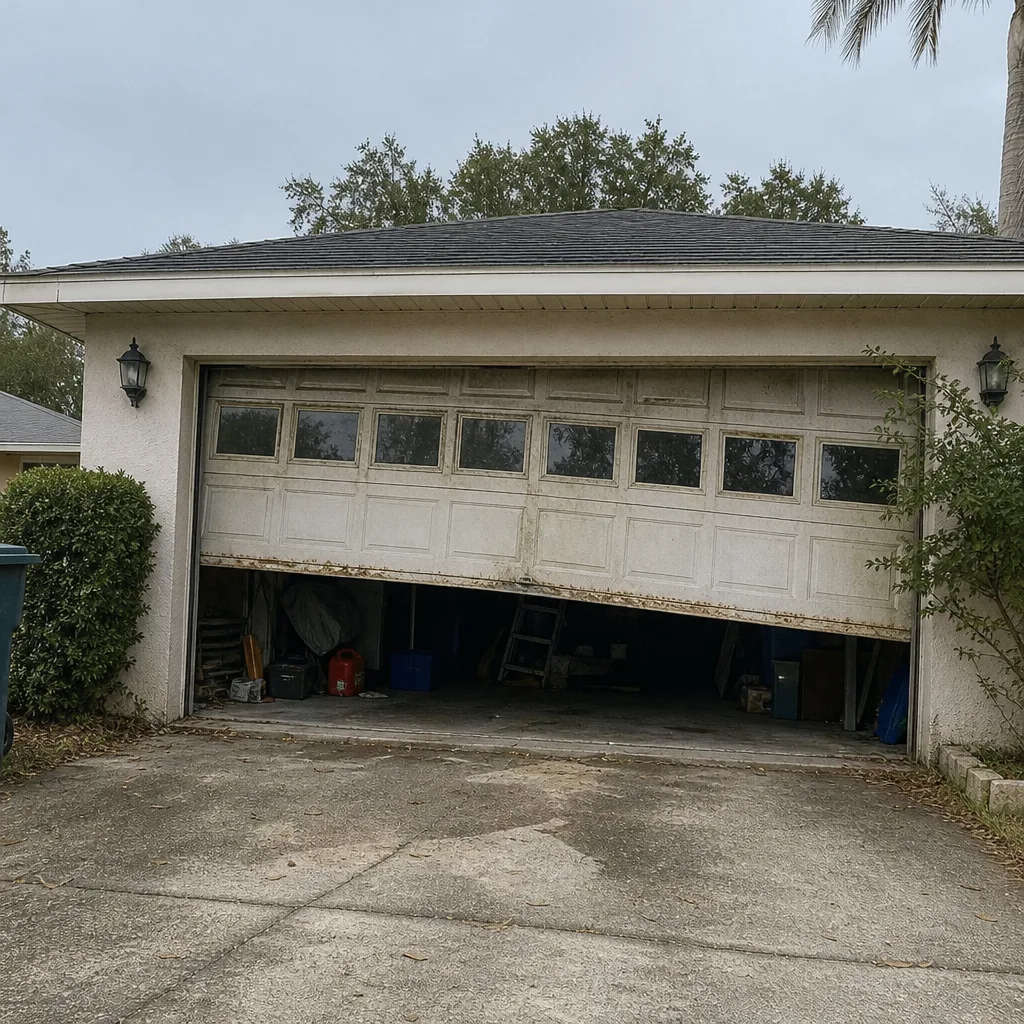
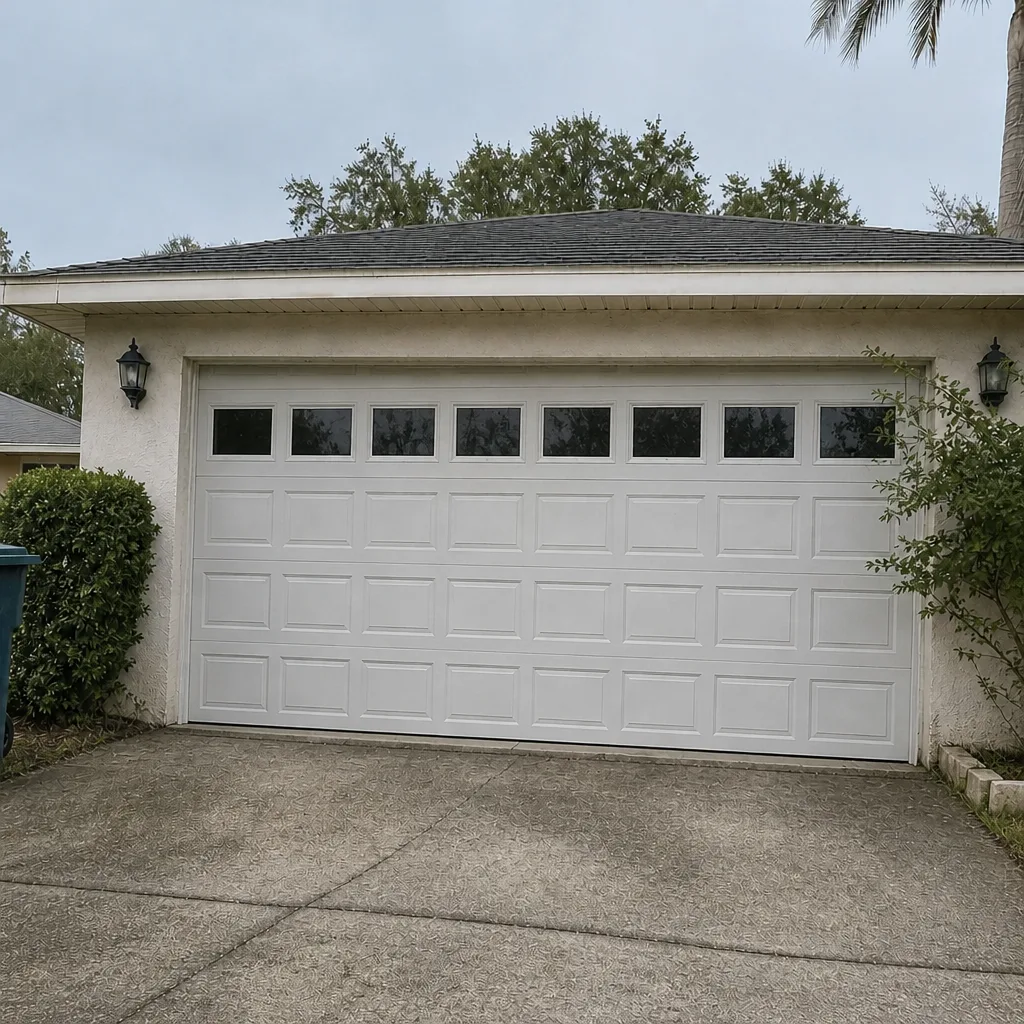
See the difference
 Before
 After
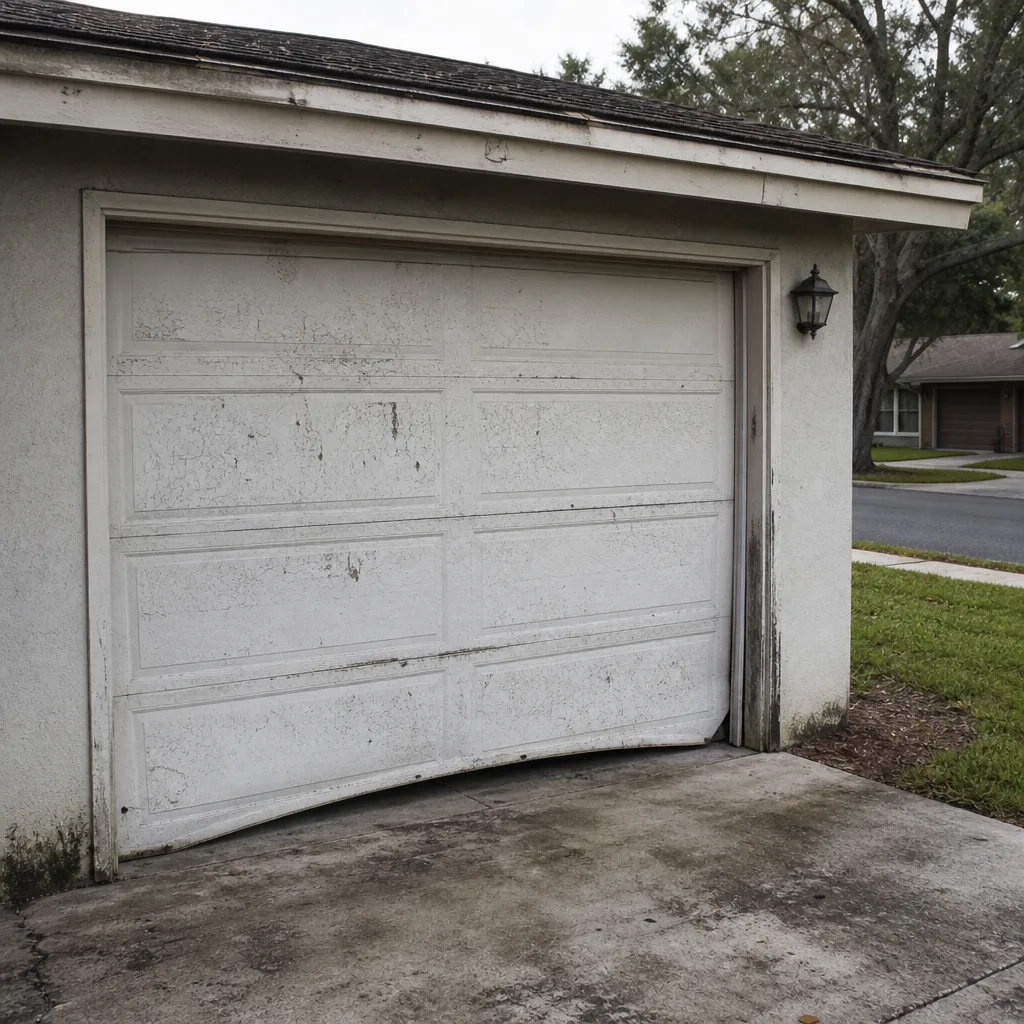 Before
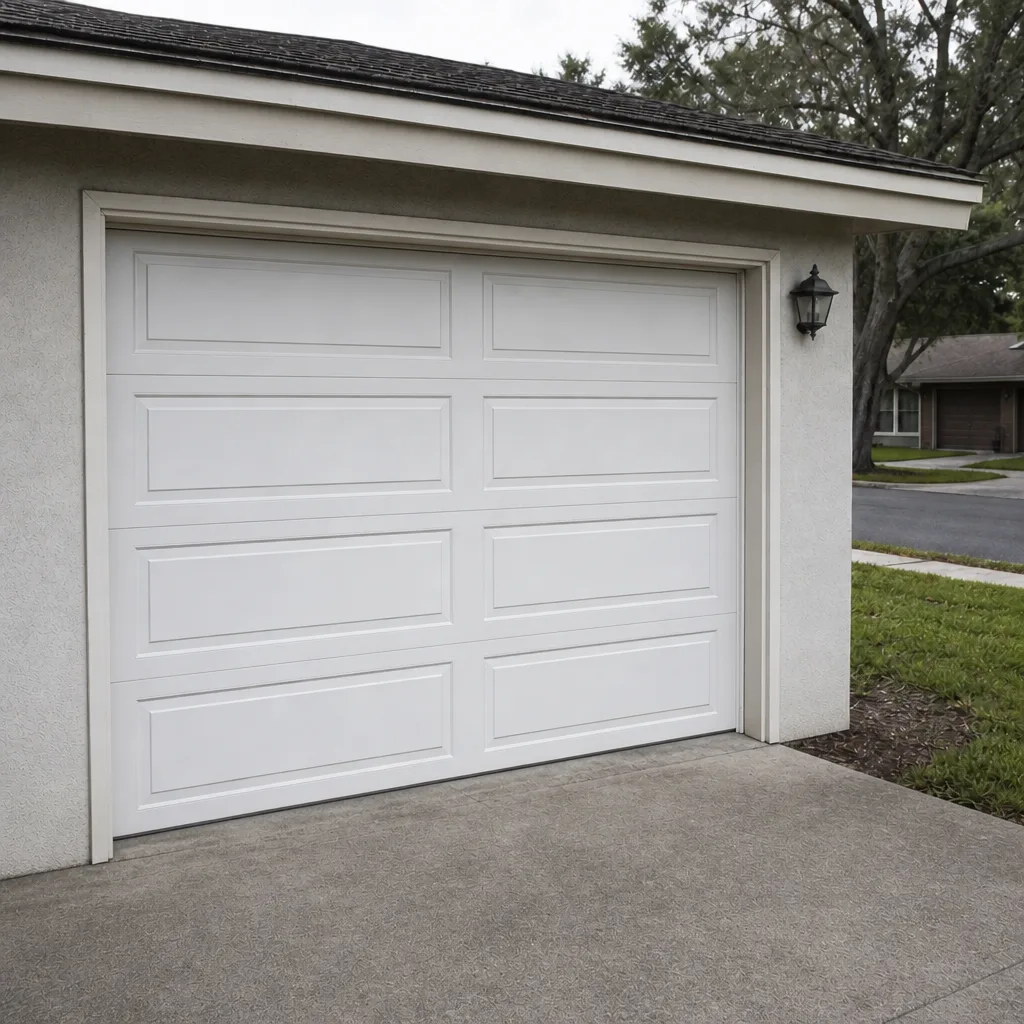 After
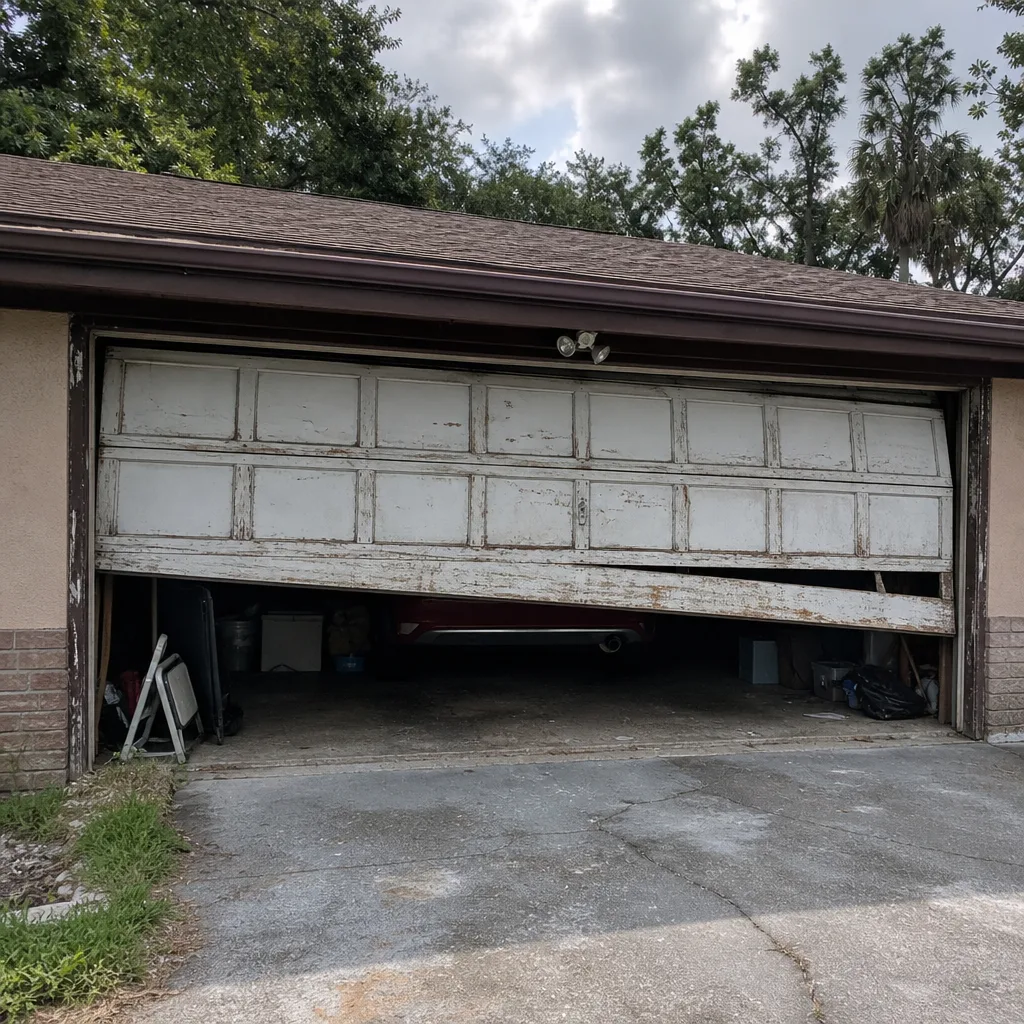 Before
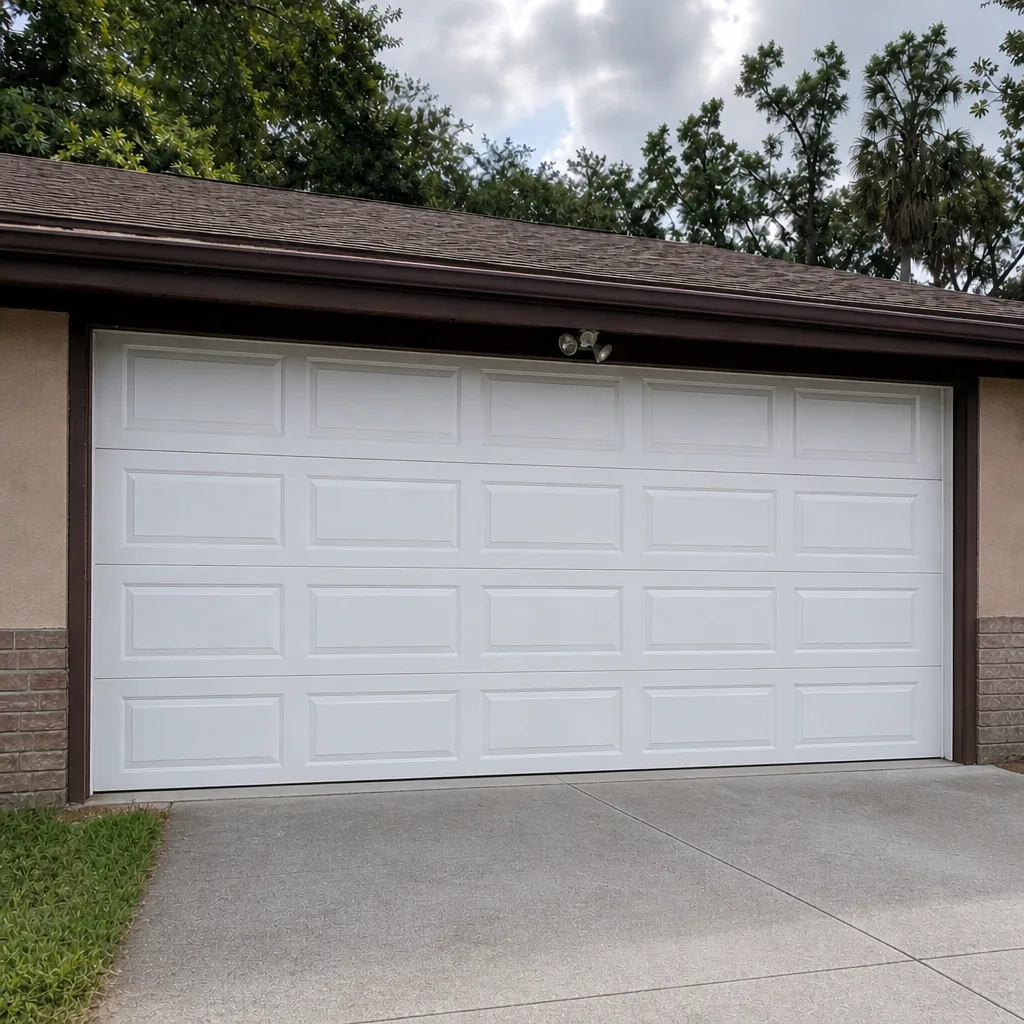 After
When to Call a Professional
Call a technician when the checklist surfaces a red-line item, when the balance test fails, or when the auto-reverse doesn’t work. Call when you hear a new sound that doesn’t go away. Call when the opener is behaving unpredictably, when a spring looks damaged, or when a door won’t open or close at all. Call when you’re not sure – the cost of an inspection is small compared to the cost of a door that fails while someone’s walking under it. Town ‘n’ Country Garage Door Repair offers free estimates in Town ‘n’ Country – call (855) 419-7945. We handle garage door repair, garage door opener repair and garage door installation across the area. The price is quoted and agreed before any work starts, so you know the number up front.
Frequently Asked Questions
Do a visual check and a balance test monthly, lubricate and inspect seals quarterly, and run a full inspection annually. The Town ‘n’ Country climate is harder on springs and weatherstripping than a milder climate, so monthly and quarterly checks catch problems before they become expensive. Call (855) 419-7945 for a free estimate if you’d like a professional to do the annual check.
No. WD-40 is a solvent and a light oil, not a maintenance lubricant for rollers. On plastic and nylon rollers it can degrade the material, and on hinges it evaporates quickly and leaves them dry. Use silicone spray on hinges and steel roller stems, and leave nylon and plastic rollers clean and dry. If they’re making noise, replace them – call (855) 419-7945 for an estimate.
The balance test checks whether the springs are properly supporting the door’s weight, with the opener disengaged. The auto-reverse test checks whether the door reverses on contact or when the photo-eye beam is interrupted. Both matter. The balance test tells you the mechanical state of the door; the auto-reverse test tells you the door is safe. If either fails, call a technician at (855) 419-7945.
Grinding usually points to worn rollers, a dry torsion spring, or a track that’s shifted. In Town ‘n’ Country’s heat, lubricants break down faster, so a door that was quiet in spring can start grinding by July. Lubricate with silicone spray or white lithium grease on the right components first. If the noise persists, call us for a diagnostic – estimates are free.
Stop using the door and don’t touch the spring. A broken torsion spring means the door is under unexpected load and can fall. Call us for emergency garage door service – we answer 24/7. Fast dispatch from 7am to 7pm, Sunday through Friday. Call (855) 419-7945 and we’ll schedule the repair.
Yes. Check the bottom seal from inside the garage after any heavy rain. If you find moisture, pooling, or staining on the floor, the seal isn’t working and needs replacement before it causes rust or panel damage. Also check the weatherstripping for mold. If you’re not sure what you’re seeing, call us for a free estimate at (855) 419-7945.
The Bottom Line
A good garage door maintenance checklist is not a flat list of tasks. It’s a schedule calibrated to the climate and the specific components that fail. In Town ‘n’ Country, that means monthly balance and auto-reverse tests, quarterly lubrication with the right products, and Florida-specific checks on weatherstripping, bottom seals and heat expansion. Skip the WD-40 on rollers. Leave the tracks dry. Run the balance test properly, and understand what a failing result means. When a red-line item appears – a broken spring, a frayed cable, a failed auto-reverse – stop and call a technician. Our technicians have up to 12 years of experience and are certified on eight major brands, including Chamberlain, Genie, Clopay and Amarr. Call (855) 419-7945 for a free estimate. We answer 24/7. Fast dispatch from 7am to 7pm, Sunday through Friday.
Written by the team at Town ‘n’ Country Garage Door Repair.